About Meerkats
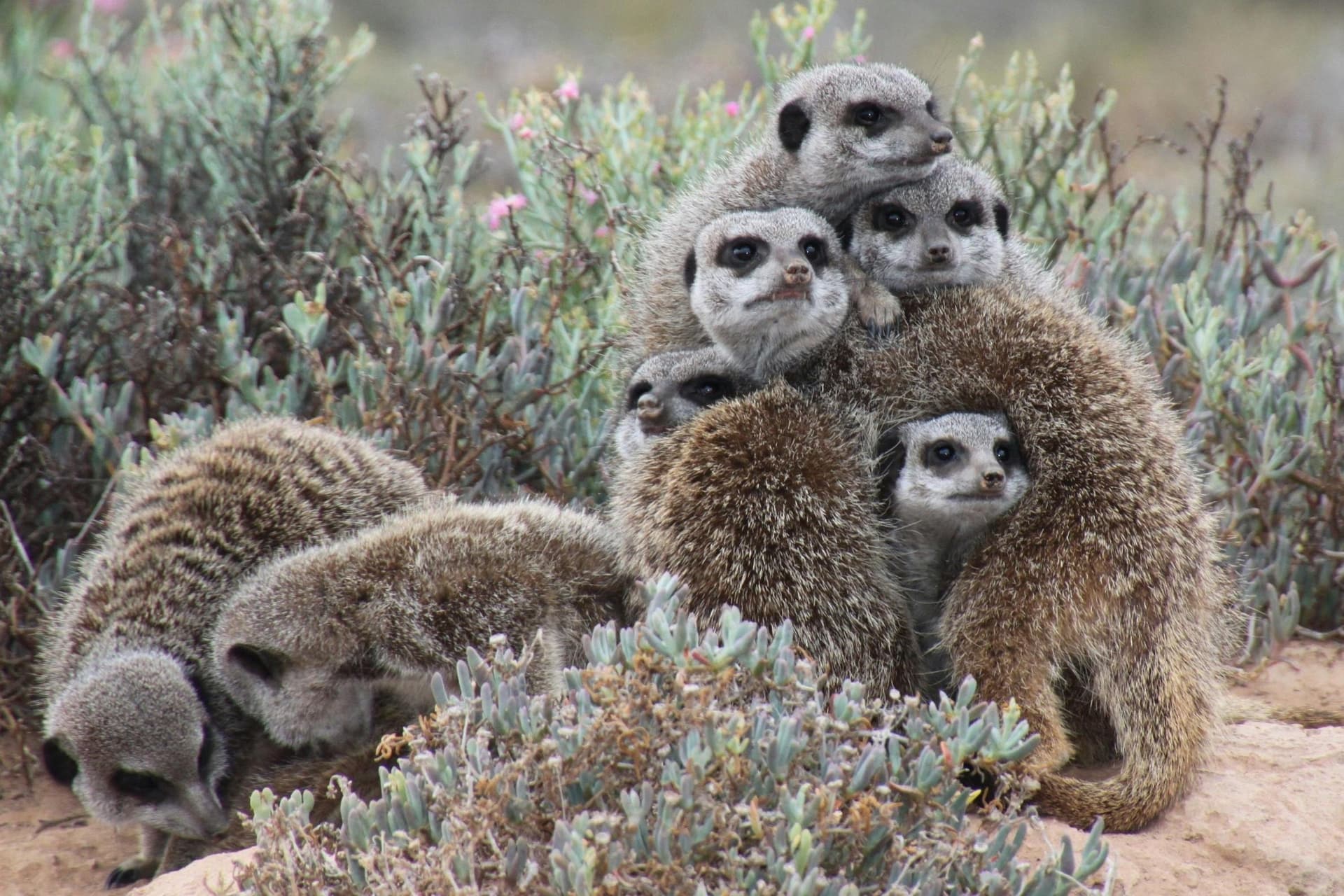
Physical Characteristics
- Length: 10-14 inches (body) plus 7-10 inches (tail)
- Weight: 1.4-2.1 pounds
- Tan or light brown coat with dark stripes
- Dark patches around eyes
- Long, sharp claws for digging
Habitat
Meerkats live in the Kalahari Desert region of southern Africa, which includes:
- Botswana
- Namibia
- South Africa
- Angola
Behavior & Diet
Meerkats are highly social animals living in groups called mobs or gangs of up to 30 individuals. They are diurnal (active during the day) and spend much of their time foraging and keeping watch for predators.
Diet includes:
- Insects
- Spiders
- Snakes
- Lizards
- Scorpions
- Small rodents
- Birds' eggs
Social Structure
Meerkat groups have a complex social hierarchy with:
- One dominant breeding pair
- Subordinate helpers who assist with:
- Babysitting young
- Sentinel duty
- Teaching hunting skills
- Defending territory
Conservation Status
While meerkats are currently listed as "Least Concern" by the International Union for Conservation of Nature (IUCN), they face various challenges including:
- Habitat loss due to human expansion
- Climate change affecting their desert ecosystem
- Limited range of suitable habitat
Fun Facts
Skilled Diggers
Can dig through sand equal to their body weight in just seconds
Immune System
They have developed immunity to certain snake and scorpion venoms
Sentinel Duty
Take turns as lookouts, standing on their hind legs to watch for predators
Social Learning
Adults teach pups hunting skills using progressive lessons
Current Research
Scientists continue to study meerkat societies to better understand:
- Cooperative breeding behavior
- Social learning and teaching in animal societies
- Vocal communication systems
- Adaptation to harsh desert environments